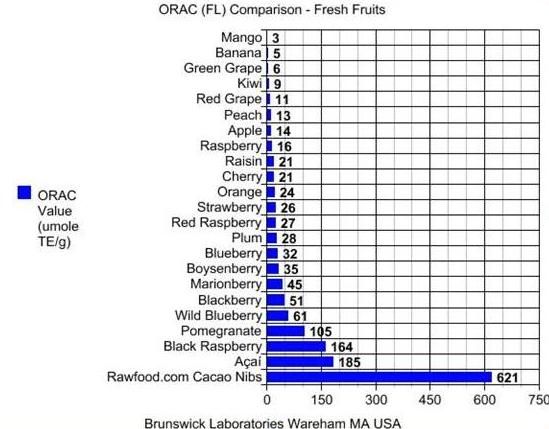
<?xml version="1.0" encoding="UTF-8"?><rss version="2.0"
	xmlns:content="http://purl.org/rss/1.0/modules/content/"
	xmlns:dc="http://purl.org/dc/elements/1.1/"
	xmlns:atom="http://www.w3.org/2005/Atom"
	xmlns:sy="http://purl.org/rss/1.0/modules/syndication/"
		>
<channel>
	<title>Comments on: All About Antioxidants</title>
	<atom:link href="http://www.bewellbuzz.com/experts/all-about-antioxidants/feed/" rel="self" type="application/rss+xml" />
	<link>http://www.bewellbuzz.com/experts/all-about-antioxidants/</link>
	<description>The Daily Buzz On Being Well</description>
	<lastBuildDate>Wed, 08 Feb 2012 22:41:21 +0000</lastBuildDate>
	<sy:updatePeriod>hourly</sy:updatePeriod>
	<sy:updateFrequency>1</sy:updateFrequency>
	<generator>http://wordpress.org/?v=3.3.1</generator>
	<item>
		<title>By: Kitchen Rugs</title>
		<link>http://www.bewellbuzz.com/experts/all-about-antioxidants/comment-page-1/#comment-2289</link>
		<dc:creator>Kitchen Rugs</dc:creator>
		<pubDate>Mon, 11 Oct 2010 16:30:43 +0000</pubDate>
		<guid isPermaLink="false">http://www.bewellbuzz.com/?p=592#comment-2289</guid>
		<description>free radicals are the number stuff that causes aging and kills our body slowly but surely</description>
		<content:encoded><![CDATA[<p>free radicals are the number stuff that causes aging and kills our body slowly but surely</p>
<p>Like or Dislike: <img style="padding: 0px; border: none; cursor: pointer;" onmouseover="this.width=this.width*1.3" onmouseout="this.width=this.width/1.2" id="up-2289" src="http://www.bewellbuzz.com/wp-content/plugins/comment-rating/images/1_14_up.png" alt="Thumb up" onclick="javascript:ckratingKarma('2289', 'add', 'www.bewellbuzz.com/wp-content/plugins/comment-rating/', '1_14_');" title="Thumb up" /> <span id="karma-2289-up" style="font-size:12px; color:#009933;">0</span>&nbsp;<img style="padding: 0px; border: none; cursor: pointer;" onmouseover="this.width=this.width*1.3" onmouseout="this.width=this.width/1.2" id="down-2289" src="http://www.bewellbuzz.com/wp-content/plugins/comment-rating/images/1_14_down.png" alt="Thumb down" onclick="javascript:ckratingKarma('2289', 'subtract', 'www.bewellbuzz.com/wp-content/plugins/comment-rating/', '1_14_')" title="Thumb down" /> <span id="karma-2289-down" style="font-size:12px; color:#990033;">0</span></p>]]></content:encoded>
	</item>
	<item>
		<title>By: Roberto</title>
		<link>http://www.bewellbuzz.com/experts/all-about-antioxidants/comment-page-1/#comment-2106</link>
		<dc:creator>Roberto</dc:creator>
		<pubDate>Thu, 16 Sep 2010 19:50:43 +0000</pubDate>
		<guid isPermaLink="false">http://www.bewellbuzz.com/?p=592#comment-2106</guid>
		<description>Can anyone tell me about the latest &amp; greatest all new 
super antioxidant food called maqui berry?  I just saw 
on the self of a health food store and the ORAC rating 
is off the charts.  It&#039;s not listed here so I&#039;ll throw
it out to the community.</description>
		<content:encoded><![CDATA[<p>Can anyone tell me about the latest &amp; greatest all new<br />
super antioxidant food called maqui berry?  I just saw<br />
on the self of a health food store and the ORAC rating<br />
is off the charts.  It&#8217;s not listed here so I&#8217;ll throw<br />
it out to the community.</p>
<p>Like or Dislike: <img style="padding: 0px; border: none; cursor: pointer;" onmouseover="this.width=this.width*1.3" onmouseout="this.width=this.width/1.2" id="up-2106" src="http://www.bewellbuzz.com/wp-content/plugins/comment-rating/images/1_14_up.png" alt="Thumb up" onclick="javascript:ckratingKarma('2106', 'add', 'www.bewellbuzz.com/wp-content/plugins/comment-rating/', '1_14_');" title="Thumb up" /> <span id="karma-2106-up" style="font-size:12px; color:#009933;">0</span>&nbsp;<img style="padding: 0px; border: none; cursor: pointer;" onmouseover="this.width=this.width*1.3" onmouseout="this.width=this.width/1.2" id="down-2106" src="http://www.bewellbuzz.com/wp-content/plugins/comment-rating/images/1_14_down.png" alt="Thumb down" onclick="javascript:ckratingKarma('2106', 'subtract', 'www.bewellbuzz.com/wp-content/plugins/comment-rating/', '1_14_')" title="Thumb down" /> <span id="karma-2106-down" style="font-size:12px; color:#990033;">0</span></p>]]></content:encoded>
	</item>
	<item>
		<title>By: TreeHuggers</title>
		<link>http://www.bewellbuzz.com/experts/all-about-antioxidants/comment-page-1/#comment-1810</link>
		<dc:creator>TreeHuggers</dc:creator>
		<pubDate>Wed, 04 Aug 2010 07:13:45 +0000</pubDate>
		<guid isPermaLink="false">http://www.bewellbuzz.com/?p=592#comment-1810</guid>
		<description>Anti-oxidants have recently become a buzzword in nutrition and cancer circles. There are a lot of news stories and nutritional supplement advertisements touting anti-oxidants as &quot;magic bullets&quot; that will prevent the occurrence and/or spread of oral and other kinds of cancer. In truth, of course, there is no &quot;magic bullet&quot; to prevent cancer -- but there IS a growing body of research that shows that anti-oxidants actually provide a kind of defense against this disease. To understand how, it is important to first examine another set of compounds known as free radicals.

The human body is made up of many different types of cells, which in turn are composed of different types of molecules. Molecules consist of atoms joined by chemical bonds, formed by the electrons in an atom&#039;s outer shell. Normally, these bonds maintain stability; if they do split, they do so in balanced reactions. When weak bonds split, however, they may do so unevenly, creating what scientists call free radicals, or loose, unbalanced atoms or molecules. Often, these free radicals come from oxygen atoms; thus the term &quot;oxidation&quot; - not too dissimilar from the same process that causes metal to rust or apple pulp to turn brown.

Free radicals are very unstable compounds, without the proper number of electrons, and they tend to react quickly with neighboring compounds, trying to &quot;steal&quot; electrons from other molecules in an attempt to regain stability. If they succeed, then the &quot;victim&quot; atom or molecule usually loses its electron balance and becomes a free radical itself. In fact, even if the free radical is not able to steal the electron, it may still create such a pull as to disrupt the workings of neighboring atoms and molecules. This can start a chain reaction; and once the process is started, it can build exponentially.

Regarding cancer, the chief danger comes from the damage free radicals cause when they react with important cellular components such as DNA or the cell membrane. The DNA is, in essence, the reproductive map of the cell; if it changes, even slightly, the cell may duplicate the change when it reproduces. These changes are known as &quot;mutations&quot; and they also start a chain reaction of sorts, leading to the development of mutated, cancerous tissue such as tumors and lesions.

Even with their potential for damage, the presence of a limited number of free radicals in the body is not necessarily dangerous; free radicals are actually part of the normal metabolism of a healthy body. In fact, sometimes the body&#039;s immune system&#039;s cells create free radicals deliberately in order to neutralize viruses and bacteria. An excess of free radicals can be dangerous, however. There are a number of substances which seem to stimulate the production of free radicals -- pollution, radiation, tobacco, pesticides, and ultraviolet rays are some of the most common. Often, when something is purported to &quot;cause cancer&quot;, what it really causes is the creation of an excessive number of free radicals. Aside from cancer, free radicals have been linked to heart disease, aging, cataracts and impairment of the immune system. Researchers have also noted that free radical damage accumulates with age. Because it is not possible to directly measure free radicals in the body, scientists have reached these conclusions by measuring the by-products that result from free radical reactions.

So where do anti-oxidants come in? Anti-oxidants fight free radicals. As a cancer preventative, anti-oxidants appear to neutralize free radicals by donating one of their own electrons, thus making a free radical compound stable and ending the electron-&quot;stealing&quot; chain-reaction so dangerous to cells and DNA. The anti-oxidant compounds are able to do this because they themselves don&#039;t become free radicals in the process -- they appear to be stable with or without their donated electrons.

Our bodies naturally contain certain anti-oxidant enzymes such as superoxide dismutase, but we can also get them from the foods we eat. The best known anti-oxidants are beta carotene, vitamins C and E, and the mineral selenium. Other anti-oxidants include ginkgo biloba, coenzyme Q10, tocotrienols, and polyphenols, which are substances found in most plants.

It is important to note, however, that all anti-oxidants do not do the same job or work in the same manner. For example, copper, manganese, zinc, selenium and other trace minerals are really only anti-oxidants when they combine with bodily enzymes to try to eliminate free radicals. Vitamins A, C, E and beta-carotene seem to work on their own or in conjunction with each other. Vitamin C, for instance can work in partnership with vitamin E, cleaning free radical substances from vitamin E molecules so those molecules can continue to attack other free radicals. Beta-carotene converts to vitamin A, a powerful anti-oxidant, when there is a shortage of vitamin A in the body. Lycopene, found in many fruits and vegetables, appears to assist the male prostate, although it also has a positive anti-oxidant effect body wide as well.

As you can see, all anti-oxidants are not created equal. If you get an adequate supply of one anti-oxidant, it doesn&#039;t mean you wouldn&#039;t benefit by the use of another. There is also such a thing as too much of an anti-oxidant; Vitamin A can be toxic when taken in too large a quantity. This is an area where your own research should be combined with a consultation with a doctor or dietician.

No, anti-oxidants are not &quot;magic bullets&quot; - but they are tools, at least in a nutritional sense. As we continue to grow in our understanding of what causes cancer and what prevents it, anti-oxidants may turn out to be an extremely valuable tool.

NOTE: I&#039;ve dedicated my life to Educating Consumers on Natural, Organic, Supplements, Vitamins, Healthy Living, Natural Healing, Non-Genetically Modified, Non-Chemical Enhanced or anything we consume made from Un-Natural Sources. I&#039;m asking anyone who reads my articles to post articles like it, or my articles on Great Blogs like this one to spread the word and help make people healthier. You can take credit for the articles, you can go to my Facebook Fan page and get information from there if you&#039;d like or you can go to my store by clicking on my name above for information. I don&#039;t mind if you use articles from my websites. The more we work together, the bigger the demand will be to grow more Natural and Organic Foods. We can&#039;t beat big business and stop them from producing products that cause a vast majority of America&#039;s Health problems because they&#039;re after quanity and profits. Until they see the market shift and start losing money, they won&#039;t change. That&#039;s up to us and it&#039;s time we demand better, safer, healthier supplements, vitamins, and food. We can show them, we the consumers are in control. That all starts with education and helping educate people who have not yet learned about these subjects. My Facebook Fan page is located at http:/www.Facebook.com/TreeHuggersOnline

Thanks and I&#039;ll post new articles like this once per week!</description>
		<content:encoded><![CDATA[<p>Anti-oxidants have recently become a buzzword in nutrition and cancer circles. There are a lot of news stories and nutritional supplement advertisements touting anti-oxidants as &#8220;magic bullets&#8221; that will prevent the occurrence and/or spread of oral and other kinds of cancer. In truth, of course, there is no &#8220;magic bullet&#8221; to prevent cancer &#8212; but there IS a growing body of research that shows that anti-oxidants actually provide a kind of defense against this disease. To understand how, it is important to first examine another set of compounds known as free radicals.</p>
<p>The human body is made up of many different types of cells, which in turn are composed of different types of molecules. Molecules consist of atoms joined by chemical bonds, formed by the electrons in an atom&#8217;s outer shell. Normally, these bonds maintain stability; if they do split, they do so in balanced reactions. When weak bonds split, however, they may do so unevenly, creating what scientists call free radicals, or loose, unbalanced atoms or molecules. Often, these free radicals come from oxygen atoms; thus the term &#8220;oxidation&#8221; &#8211; not too dissimilar from the same process that causes metal to rust or apple pulp to turn brown.</p>
<p>Free radicals are very unstable compounds, without the proper number of electrons, and they tend to react quickly with neighboring compounds, trying to &#8220;steal&#8221; electrons from other molecules in an attempt to regain stability. If they succeed, then the &#8220;victim&#8221; atom or molecule usually loses its electron balance and becomes a free radical itself. In fact, even if the free radical is not able to steal the electron, it may still create such a pull as to disrupt the workings of neighboring atoms and molecules. This can start a chain reaction; and once the process is started, it can build exponentially.</p>
<p>Regarding cancer, the chief danger comes from the damage free radicals cause when they react with important cellular components such as DNA or the cell membrane. The DNA is, in essence, the reproductive map of the cell; if it changes, even slightly, the cell may duplicate the change when it reproduces. These changes are known as &#8220;mutations&#8221; and they also start a chain reaction of sorts, leading to the development of mutated, cancerous tissue such as tumors and lesions.</p>
<p>Even with their potential for damage, the presence of a limited number of free radicals in the body is not necessarily dangerous; free radicals are actually part of the normal metabolism of a healthy body. In fact, sometimes the body&#8217;s immune system&#8217;s cells create free radicals deliberately in order to neutralize viruses and bacteria. An excess of free radicals can be dangerous, however. There are a number of substances which seem to stimulate the production of free radicals &#8212; pollution, radiation, tobacco, pesticides, and ultraviolet rays are some of the most common. Often, when something is purported to &#8220;cause cancer&#8221;, what it really causes is the creation of an excessive number of free radicals. Aside from cancer, free radicals have been linked to heart disease, aging, cataracts and impairment of the immune system. Researchers have also noted that free radical damage accumulates with age. Because it is not possible to directly measure free radicals in the body, scientists have reached these conclusions by measuring the by-products that result from free radical reactions.</p>
<p>So where do anti-oxidants come in? Anti-oxidants fight free radicals. As a cancer preventative, anti-oxidants appear to neutralize free radicals by donating one of their own electrons, thus making a free radical compound stable and ending the electron-&#8221;stealing&#8221; chain-reaction so dangerous to cells and DNA. The anti-oxidant compounds are able to do this because they themselves don&#8217;t become free radicals in the process &#8212; they appear to be stable with or without their donated electrons.</p>
<p>Our bodies naturally contain certain anti-oxidant enzymes such as superoxide dismutase, but we can also get them from the foods we eat. The best known anti-oxidants are beta carotene, vitamins C and E, and the mineral selenium. Other anti-oxidants include ginkgo biloba, coenzyme Q10, tocotrienols, and polyphenols, which are substances found in most plants.</p>
<p>It is important to note, however, that all anti-oxidants do not do the same job or work in the same manner. For example, copper, manganese, zinc, selenium and other trace minerals are really only anti-oxidants when they combine with bodily enzymes to try to eliminate free radicals. Vitamins A, C, E and beta-carotene seem to work on their own or in conjunction with each other. Vitamin C, for instance can work in partnership with vitamin E, cleaning free radical substances from vitamin E molecules so those molecules can continue to attack other free radicals. Beta-carotene converts to vitamin A, a powerful anti-oxidant, when there is a shortage of vitamin A in the body. Lycopene, found in many fruits and vegetables, appears to assist the male prostate, although it also has a positive anti-oxidant effect body wide as well.</p>
<p>As you can see, all anti-oxidants are not created equal. If you get an adequate supply of one anti-oxidant, it doesn&#8217;t mean you wouldn&#8217;t benefit by the use of another. There is also such a thing as too much of an anti-oxidant; Vitamin A can be toxic when taken in too large a quantity. This is an area where your own research should be combined with a consultation with a doctor or dietician.</p>
<p>No, anti-oxidants are not &#8220;magic bullets&#8221; &#8211; but they are tools, at least in a nutritional sense. As we continue to grow in our understanding of what causes cancer and what prevents it, anti-oxidants may turn out to be an extremely valuable tool.</p>
<p>NOTE: I&#8217;ve dedicated my life to Educating Consumers on Natural, Organic, Supplements, Vitamins, Healthy Living, Natural Healing, Non-Genetically Modified, Non-Chemical Enhanced or anything we consume made from Un-Natural Sources. I&#8217;m asking anyone who reads my articles to post articles like it, or my articles on Great Blogs like this one to spread the word and help make people healthier. You can take credit for the articles, you can go to my Facebook Fan page and get information from there if you&#8217;d like or you can go to my store by clicking on my name above for information. I don&#8217;t mind if you use articles from my websites. The more we work together, the bigger the demand will be to grow more Natural and Organic Foods. We can&#8217;t beat big business and stop them from producing products that cause a vast majority of America&#8217;s Health problems because they&#8217;re after quanity and profits. Until they see the market shift and start losing money, they won&#8217;t change. That&#8217;s up to us and it&#8217;s time we demand better, safer, healthier supplements, vitamins, and food. We can show them, we the consumers are in control. That all starts with education and helping educate people who have not yet learned about these subjects. My Facebook Fan page is located at http:/www.Facebook.com/TreeHuggersOnline</p>
<p>Thanks and I&#8217;ll post new articles like this once per week!</p>
<p>Like or Dislike: <img style="padding: 0px; border: none; cursor: pointer;" onmouseover="this.width=this.width*1.3" onmouseout="this.width=this.width/1.2" id="up-1810" src="http://www.bewellbuzz.com/wp-content/plugins/comment-rating/images/1_14_up.png" alt="Thumb up" onclick="javascript:ckratingKarma('1810', 'add', 'www.bewellbuzz.com/wp-content/plugins/comment-rating/', '1_14_');" title="Thumb up" /> <span id="karma-1810-up" style="font-size:12px; color:#009933;">0</span>&nbsp;<img style="padding: 0px; border: none; cursor: pointer;" onmouseover="this.width=this.width*1.3" onmouseout="this.width=this.width/1.2" id="down-1810" src="http://www.bewellbuzz.com/wp-content/plugins/comment-rating/images/1_14_down.png" alt="Thumb down" onclick="javascript:ckratingKarma('1810', 'subtract', 'www.bewellbuzz.com/wp-content/plugins/comment-rating/', '1_14_')" title="Thumb down" /> <span id="karma-1810-down" style="font-size:12px; color:#990033;">0</span></p>]]></content:encoded>
	</item>
	<item>
		<title>By: Kris Acai Berry Pills</title>
		<link>http://www.bewellbuzz.com/experts/all-about-antioxidants/comment-page-1/#comment-317</link>
		<dc:creator>Kris Acai Berry Pills</dc:creator>
		<pubDate>Tue, 24 Mar 2009 12:16:33 +0000</pubDate>
		<guid isPermaLink="false">http://www.bewellbuzz.com/?p=592#comment-317</guid>
		<description>thanks alot for this great post. So much details in the post i love it :)</description>
		<content:encoded><![CDATA[<p>thanks alot for this great post. So much details in the post i love it <img src='http://www.bewellbuzz.com/wp-includes/images/smilies/icon_smile.gif' alt=':)' class='wp-smiley' /> </p>
<p>Like or Dislike: <img style="padding: 0px; border: none; cursor: pointer;" onmouseover="this.width=this.width*1.3" onmouseout="this.width=this.width/1.2" id="up-317" src="http://www.bewellbuzz.com/wp-content/plugins/comment-rating/images/1_14_up.png" alt="Thumb up" onclick="javascript:ckratingKarma('317', 'add', 'www.bewellbuzz.com/wp-content/plugins/comment-rating/', '1_14_');" title="Thumb up" /> <span id="karma-317-up" style="font-size:12px; color:#009933;">0</span>&nbsp;<img style="padding: 0px; border: none; cursor: pointer;" onmouseover="this.width=this.width*1.3" onmouseout="this.width=this.width/1.2" id="down-317" src="http://www.bewellbuzz.com/wp-content/plugins/comment-rating/images/1_14_down.png" alt="Thumb down" onclick="javascript:ckratingKarma('317', 'subtract', 'www.bewellbuzz.com/wp-content/plugins/comment-rating/', '1_14_')" title="Thumb down" /> <span id="karma-317-down" style="font-size:12px; color:#990033;">0</span></p>]]></content:encoded>
	</item>
	<item>
		<title>By: Pamela</title>
		<link>http://www.bewellbuzz.com/experts/all-about-antioxidants/comment-page-1/#comment-165</link>
		<dc:creator>Pamela</dc:creator>
		<pubDate>Tue, 27 Jan 2009 11:54:09 +0000</pubDate>
		<guid isPermaLink="false">http://www.bewellbuzz.com/?p=592#comment-165</guid>
		<description>What a great, clear explanation!

A fine, but important point: David, When an antioxidant food donates its spare electron to a free radical, does the food which donated the electron BECOME a free radical, since then IT has an unpaired electron?  

Similarly:  Does atomic hydrogen then BECOME a free radical when it donates an electron?

Are the electrons from the earth the only ones which do not become free radicals themselves?

It is because i respect you that i ask you difficult questions.

Happiness, Health and Abundance for All!</description>
		<content:encoded><![CDATA[<p>What a great, clear explanation!</p>
<p>A fine, but important point: David, When an antioxidant food donates its spare electron to a free radical, does the food which donated the electron BECOME a free radical, since then IT has an unpaired electron?  </p>
<p>Similarly:  Does atomic hydrogen then BECOME a free radical when it donates an electron?</p>
<p>Are the electrons from the earth the only ones which do not become free radicals themselves?</p>
<p>It is because i respect you that i ask you difficult questions.</p>
<p>Happiness, Health and Abundance for All!</p>
<p>Like or Dislike: <img style="padding: 0px; border: none; cursor: pointer;" onmouseover="this.width=this.width*1.3" onmouseout="this.width=this.width/1.2" id="up-165" src="http://www.bewellbuzz.com/wp-content/plugins/comment-rating/images/1_14_up.png" alt="Thumb up" onclick="javascript:ckratingKarma('165', 'add', 'www.bewellbuzz.com/wp-content/plugins/comment-rating/', '1_14_');" title="Thumb up" /> <span id="karma-165-up" style="font-size:12px; color:#009933;">0</span>&nbsp;<img style="padding: 0px; border: none; cursor: pointer;" onmouseover="this.width=this.width*1.3" onmouseout="this.width=this.width/1.2" id="down-165" src="http://www.bewellbuzz.com/wp-content/plugins/comment-rating/images/1_14_down.png" alt="Thumb down" onclick="javascript:ckratingKarma('165', 'subtract', 'www.bewellbuzz.com/wp-content/plugins/comment-rating/', '1_14_')" title="Thumb down" /> <span id="karma-165-down" style="font-size:12px; color:#990033;">0</span></p>]]></content:encoded>
	</item>
	<item>
		<title>By: marijana</title>
		<link>http://www.bewellbuzz.com/experts/all-about-antioxidants/comment-page-1/#comment-91</link>
		<dc:creator>marijana</dc:creator>
		<pubDate>Wed, 14 Jan 2009 12:25:42 +0000</pubDate>
		<guid isPermaLink="false">http://www.bewellbuzz.com/?p=592#comment-91</guid>
		<description>what a great news for us, chocolate lovers!!! ;-)</description>
		<content:encoded><![CDATA[<p>what a great news for us, chocolate lovers!!! <img src='http://www.bewellbuzz.com/wp-includes/images/smilies/icon_wink.gif' alt=';-)' class='wp-smiley' /> </p>
<p>Like or Dislike: <img style="padding: 0px; border: none; cursor: pointer;" onmouseover="this.width=this.width*1.3" onmouseout="this.width=this.width/1.2" id="up-91" src="http://www.bewellbuzz.com/wp-content/plugins/comment-rating/images/1_14_up.png" alt="Thumb up" onclick="javascript:ckratingKarma('91', 'add', 'www.bewellbuzz.com/wp-content/plugins/comment-rating/', '1_14_');" title="Thumb up" /> <span id="karma-91-up" style="font-size:12px; color:#009933;">0</span>&nbsp;<img style="padding: 0px; border: none; cursor: pointer;" onmouseover="this.width=this.width*1.3" onmouseout="this.width=this.width/1.2" id="down-91" src="http://www.bewellbuzz.com/wp-content/plugins/comment-rating/images/1_14_down.png" alt="Thumb down" onclick="javascript:ckratingKarma('91', 'subtract', 'www.bewellbuzz.com/wp-content/plugins/comment-rating/', '1_14_')" title="Thumb down" /> <span id="karma-91-down" style="font-size:12px; color:#990033;">0</span></p>]]></content:encoded>
	</item>
</channel>
</rss>

<!-- Performance optimized by W3 Total Cache. Learn more: http://www.w3-edge.com/wordpress-plugins/

Minified using disk: basic (Feed is rejected)
Page Caching using disk: basic
Database Caching using apc
Object Caching 1023/1066 objects using apc

Served from: www.bewellbuzz.com @ 2012-02-09 02:59:06 -->